
Export Guide of Air Fresheners from Qingdao, China to Santos, Brazil
Why Air Fresheners Are a Regulated Export
As a popular daily chemical product, air fresheners are widely exported from Qingdao to Brazil for household, supermarket, hotel and office use. But they are not general cargo. Because an air freshener can is an aerosol — a pressure container holding a flammable propellant gas — every shipment is classified as a dangerous good under the IMDG Code, the international rulebook for maritime dangerous goods safety published by the International Maritime Organization.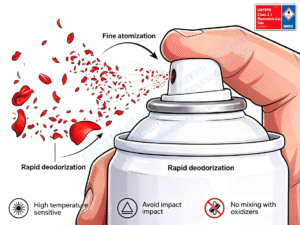
This guide focuses on the shipping route from Qingdao to Santos Port, sorting out product specifications, core features, marine transportation rules and customs clearance requirements for standardized export operation.
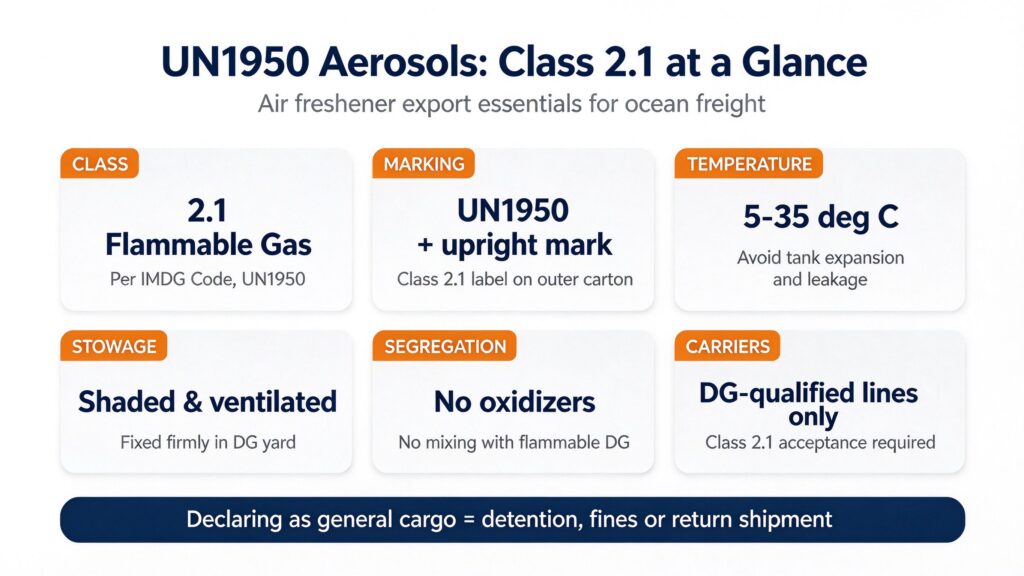
Figure 1 — UN1950 Class 2.1 transport essentials at a glance.
1. Main Product Specifications
Aerosol cans are the mainstream type for Brazil market. Common capacities include 150ml, 200ml, 300ml, 320ml, 360ml and 400ml, among which 320ml, 360ml and 400ml are best-selling. Made of pressure-resistant tin cans with anti-mistouch nozzles, the products adopt classic fragrances like lemon, lavender and ocean scent with no allergenic ingredients.
Standard packing: 24 or 36 cans per carton with shockproof design. Single can weight ranges from 90g to 220g, and carton gross weight is 8kg-15kg, suitable for FCL and LCL shipment. English/Portuguese labels and customized logos are available.
2. Product Features & Shipping Classification
Classified as UN1950 Aerosols, Class 2.1 Flammable Gas per the IMDG Code, the product is a restricted dangerous good for marine transport. It features rapid deodorization, fine atomization, long-lasting fragrance and safe mild formula. With pressure-resistant and explosion-proof cans, it ensures stable storage and transportation.
Why Class 2.1?
An aerosol can is dangerous not because of the fragrance inside, but because of the propellant — the compressed gas (typically butane or propane-based) that pushes the product out. That gas is flammable, which is why air freshener aerosols fall under Class 2.1 (flammable gas) rather than general cargo. The classification decision depends on the propellant’s flammability and the can’s pressure, and it must be confirmed in the MSDS before booking.
The goods are sensitive to high temperature, direct sunlight and violent impact. Mix loading with strong oxidants and flammable hazardous goods is strictly prohibited. For the wider picture of how Class 2 gases are handled in ocean freight from China, see our guide on Class 2 gas shipping.
3. Core Marine Shipping Requirements (Qingdao to Santos)
Only carriers with Class 2.1 dangerous goods qualification accept the shipment. The total transit time is 30-38 days via direct or transshipment routes. Goods shall be stowed in shaded and ventilated dangerous cargo yards with firm fixation and reserved ventilation space.
Standard marks including UN1950 hazard label, Class 2.1 flammable gas sign and upright placement mark must be pasted on outer cartons. The whole transportation temperature shall be controlled at 5℃-35℃ to avoid tank expansion and leakage.
Packaging rules that carriers actually check:
- UN-certified outer cartons. Aerosol cans must be packed in packagings that meet the packaging requirements for dangerous goods in ocean transport — the can itself is the pressure container, and the outer carton must carry the UN specification mark for the packing group that applies.
- Upright orientation. “This side up” and upright marks are mandatory; aerosol valves leak if cartons are laid flat or inverted for long periods.
- Short-circuit and impact protection. Cans must not rattle against each other — dividers or layer pads prevent valve damage during sea vibration.
- Complete label set on the outer carton: UN1950 label, Class 2.1 flammable gas label, upright mark, and the shipper/receiver identification.
4. Customs Clearance Documents
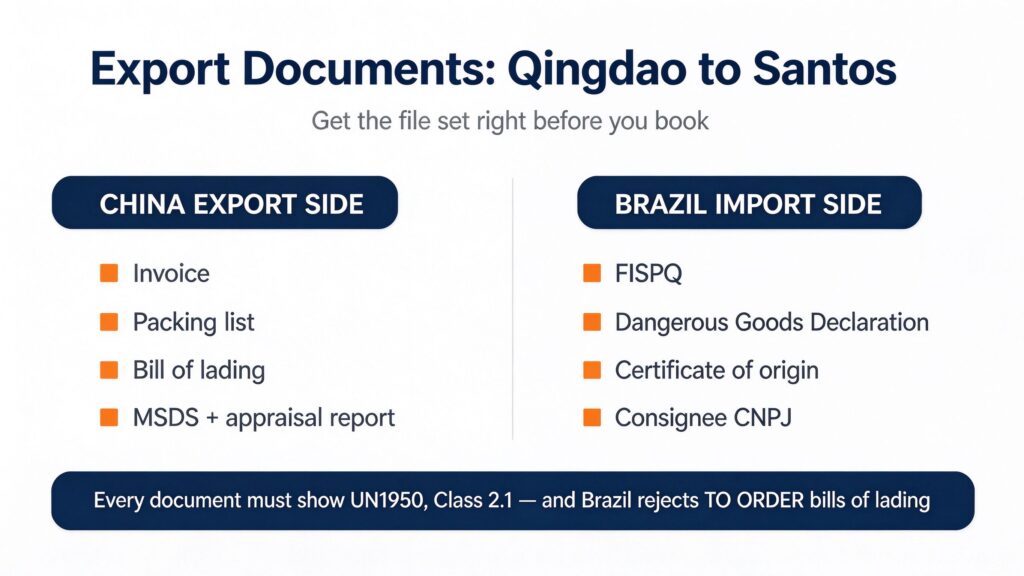
Figure 2 — The document set for a compliant Qingdao–Santos aerosol shipment.
Domestic declaration requires invoice, packing list, bill of lading, MSDS, dangerous goods appraisal report and declaration form. For Brazil customs clearance, FISPQ, DGD, certificate of origin and valid CNPJ tax number of consignee are mandatory. Brazil customs strictly checks product formula and label compliance, and rejects TO ORDER B/L.
| Document | Required By | What It Confirms |
|---|---|---|
| Invoice & packing list | China customs | Value, quantity, carton details |
| MSDS/SDS | China customs + carrier | UN1950, Class 2.1, Section 14 transport data |
| Dangerous goods appraisal report | China customs | Classification confirmation by a qualified lab |
| Export declaration form | China customs | Formal customs declaration |
| Bill of lading (named consignee) | Carrier + Brazil customs | “TO ORDER” B/L is rejected by Brazil customs |
| FISPQ | Brazil customs | Brazilian-language SDS (Portuguese) |
| DGD | Carrier | UN number, PSN, class, quantity, emergency contact |
| Certificate of origin | Brazil customs | Origin eligibility for import duties |
| CNPJ of consignee | Brazil customs | Valid Brazilian tax registration of the importer |
Every document must show the same UN number — UN1950, Class 2.1 — consistently across the MSDS, the appraisal report, the DGD and the package marks. Our MSDS checklist guide explains the 17 elements that get a DG file accepted or rejected at the gate.
5. Risk Prevention & Summary
It is forbidden to declare dangerous goods as general cargo, which will cause detention, fine or return shipment. Non-compliant packing, wrong documents and improper stowage are major export risks.
The five mistakes that sink aerosol shipments from China:
- Booking as general cargo — aerosol cans detected at the port gate are treated as undeclared dangerous goods: detention, fines, or return shipment.
- Missing or mismatched MSDS — flash point and propellant data that contradict the DGD is a rejection trigger.
- Uncertified cartons — outer packaging without a valid UN specification mark fails inspection.
- Wrong document set for Brazil — missing FISPQ, CNPJ mismatch, or a “TO ORDER” bill of lading stops clearance at Santos.
- Improper stowage — cans stowed in direct sunlight or mixed with oxidants violate segregation and temperature rules.
Standardized compliance with UN1950 shipping rules and Brazilian import regulations is the key to stable and efficient air freshener export from Qingdao to Santos Port.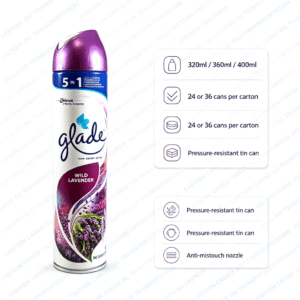
Frequently Asked Questions
Q1: What is the UN classification for air fresheners? Air freshener aerosols are classified as UN1950 Aerosols, Class 2.1 Flammable Gas under the IMDG Code, because the propellant gas is flammable. They are restricted dangerous goods for ocean freight.
Q2: Can I ship air fresheners as general cargo? No. Declaring dangerous goods as general cargo is illegal and is detected at the port gate — the result is detention, fines, or return shipment. Always declare UN1950 Class 2.1 properly.
Q3: Which documents do I need for Brazil customs? FISPQ (Portuguese SDS), Dangerous Goods Declaration, certificate of origin, and the consignee’s valid CNPJ tax number. Brazil also requires the formula and label to comply with local regulations.
Q4: Why does Brazil reject “TO ORDER” bills of lading? Brazilian customs requires a named consignee on the bill of lading for import clearance. A “TO ORDER” B/L without a named consignee cannot be cleared, so name the importer on the B/L from the start.
Q5: What temperature is required during transport? The whole transportation temperature should be controlled at 5℃-35℃ to avoid tank expansion and leakage. Goods must be stowed in shaded, ventilated DG yards, away from direct sunlight.
Q6: Can air fresheners be shipped by LCL from Qingdao? Yes. With 24 or 36 cans per carton and a carton gross weight of 8-15kg, air fresheners are suitable for both FCL and LCL. The DG qualification of the LCL consolidator matters — only Class 2.1-capable carriers and depots accept the cargo.
Q7: How long does Qingdao to Santos take? Total transit time is 30-38 days via direct or transshipment routes, plus 3-7 days for DG booking and documentation before sailing.
Tip for site owner: enable FAQPage structured data for this section in Yoast to qualify for rich results (see delivery notes).
Get a Compliant Air Freshener Quote from Qingdao
Aerosol export is a checklist: correct classification, certified packaging, the full document set, and a Class 2.1-capable carrier. Our IMDG-certified team reviews your MSDS and appraisal report before booking, then returns a transparent HAZMAT quote for Qingdao to Santos or any other port pair.