
IMDG-certified shipping for aerosols, butane / propane cartridges, fire extinguishers, refrigerants, and compressed gas cylinders from Qingdao, Shanghai, and Shenzhen.
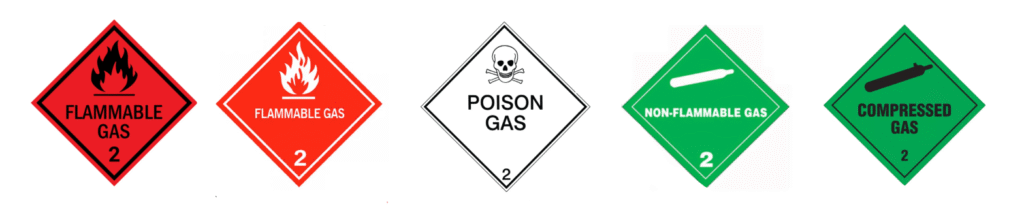
Class 2 Has Three Sub-Divisions
Not all gases are treated the same. Carriers separate them by flammability and toxicity, and packing rules differ for each.
2.1 Flammable Gases
Butane (UN1011), propane (UN1075), aerosols (UN1950), lighters, camping gas cartridges. Ventilation and temperature-controlled stowage required.
2.2 Non-Flammable, Non-Toxic
Nitrogen, CO₂, fire extinguishers (UN1044), refrigerant gases R134a / R410a (UN3159 / UN3163). Most common gas we ship.
2.3 Toxic Gases
Chlorine, ammonia, and other inhalation-hazard gases. We do not accept Class 2.3 cargoes — these require specialized carriers and permits.
Gas Cargoes We Ship Regularly
Aerosols & Sprays (UN1950)
Air freshener sprays, deodorants, spray paints, cleaning aerosols, cosmetic sprays. Must be UN-marked pressure cans with drop-tested caps.
Butane / Propane Cartridges
Camping gas canisters, butane refills for lighters, propane cylinders. Ventilated container stowage required; some carriers only accept on-deck stowage.
Refrigerant Gases
R134a, R410a, R32, R22 in cylinders or T-cylinders. Commonly shipped for HVAC and industrial customers.
Fire Extinguishers (UN1044)
Portable fire extinguishers of all sizes. Valve locks required to prevent accidental discharge during transit.
Documentation & Requirements
Shipping Gas or Aerosol Cargo?
Send us your MSDS. We confirm classification and stowage options within 4 business hours.
Request Free Gas Quote →Class 2 Gas Shipping FAQ
Are aerosols considered dangerous goods by sea?
Yes. All aerosols (spray cans) are Class 2.2 or 2.1 depending on content. They cannot ship as ordinary cargo and require UN-marked cans and DG documentation.
Can you ship butane gas cartridges by sea?
Yes, but only on carriers accepting Class 2.1. We book ventilated or on-deck stowage and confirm container compatibility before loading.