
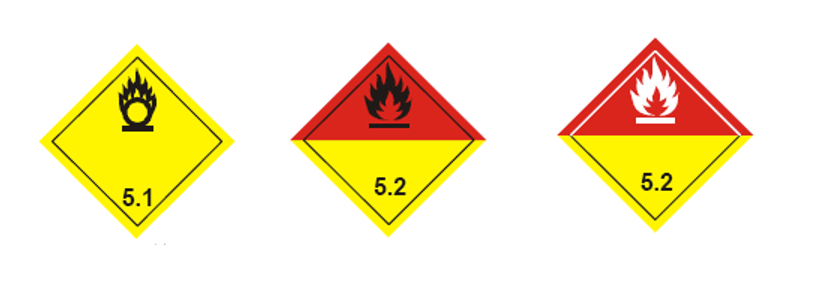
Class 5 Oxidizer Ocean Freight
IMDG-certified shipping for hydrogen peroxide, potassium permanganate, calcium hypochlorite, and organic peroxides — with strict segregation and temperature control where required.
Two Sub-Divisions of Class 5
Oxidizing substances do not burn themselves, but they release oxygen and can violently intensify a fire or cause combustion in otherwise non-flammable materials. Organic peroxides are even more sensitive — many require temperature-controlled containers.
5.1 Oxidizing Substances
Hydrogen peroxide (UN2014 / UN2984), potassium permanganate (UN1484), ammonium nitrate (UN1942), calcium hypochlorite (UN1748), sodium percarbonate.
5.2 Organic Peroxides
Benzoyl peroxide (BPO), methyl ethyl ketone peroxide (MEKP), dicumyl peroxide. Thermally unstable — most ship in reefer containers at controlled temperatures.
Concentration Changes the Classification
For oxidizers, concentration is everything. The same chemical can be non-dangerous, Class 5.1, or Class 5.2 depending on concentration — your MSDS must specify it exactly.
Hydrogen Peroxide < 20%
Not classified as dangerous goods. Can ship as ordinary cargo.
H₂O₂ 20–60%
Class 5.1 oxidizer (UN2014 / UN2984). Standard IMDG requirements.
H₂O₂ > 60%
Class 5.2 organic peroxide — restricted shipping, reefer container required.
What Makes Class 5 Tricky
Shipping Oxidizers or Organic Peroxides?
Send us your MSDS with exact concentration. We confirm classification, reefer requirement, and carrier options within 4 business hours.
Request Free Quote →Class 5 Shipping FAQ
Do organic peroxides always need a reefer container?
Most Class 5.2 organic peroxides require temperature-controlled stowage. Some types are exempted under specific IMDG exemptions — we confirm based on the product and temperature control range.
Can calcium hypochlorite (bleach granules) ship as ordinary cargo?
No. Calcium hypochlorite (UN1748) is Class 5.1 in most commercial concentrations. It cannot be consolidated with organic materials.